Should church order prevent church union?
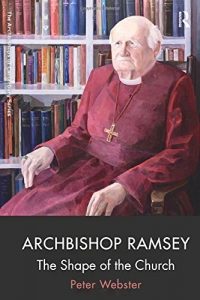 Responses to the reportMinistry and Mission in Covenant, proposing closer wedlock betwixt the Church building of England and the Methodist Church building (and discussed in my previous mail), have reignited the responses that were made to the earlier scheme in 1969, which was agreed by the Methodists but rejected past the Church of England's Church Assembly (the precursor of Full general Synod). In this extract from his biography of Michael Ramsey, and then Archbishop of Canterbury, historian Peter Webster highlights the issues and the way that Ramsey engaged with them.
Information technology may be that the most of import ecumenical event in twentieth century Britain was the failure of the scheme for reunion between the Church of England and the Methodist Church in 1972. The achievement of unity had taken on immense national and international significance, and the authors of the Scheme were in no incertitude every bit to why. Visible disunity among the churches placed constraints on co-operation at local level, leading to 'frustration, impatience and the gradual abeyance of attempt.' There was reason also to suppose that the reject in numbers in the churches and in new vocations to ordained ministry building was also consequent on the same 'blueprint of incompetence which [the churches] present in which disunity is a master feature.'
The salient fact for Michael Ramsey was that, more than 30 years after the Church of England had invited the Methodist Church to enter into negotiations, it had been the Church building of England that walked away from the table. Reflecting on the rejection of the scheme by the Church building Associates in July 1969, Ramsey thought it 'an effect in history of an almost incredible kind' that ane of the Costless Churches should have agreed to enter into union on the ground of the celebrated episcopate. 'That we Anglicans having already said that the principles of the union are audio, should now say "no" would seem to me to make our Church of England no longer apparent.' For the commencement time, leadership amongst the churches had, in a highly pregnant way, passed from the established church building.
The sticking betoken was the nature of the ordained ministry, simply to put this into context, our story begins a few years earlier, and with the broader outcome of intercommunion.
Michael Ramsey's The Church building of England and the Eastern Orthodox Church building . Why their unity is of import (1946) tells us much well-nigh his vision of the whole ecumenical cause. Few in Uk really felt the tragedy of the schism between east and due west in which 'the seamless robe of Christ received its greatest hire'; the schism had been 'the parent tragedy of many later tragedies of Christian segmentation.' All the churches of the Westward thus inherited a 'maimed Christendom' without true wholeness. What was to exist done about information technology? The 1947 report Catholicity, of which Ramsey was the principal author, argued that all the churches would demand to go beyond their own understandings of ecclesiology, bent out of shape as they were by the schisms that had brought the separate churches into existence. Unity could not be achieved by a mere 'fitting-together of broken pieces.'
Intercommunion
Ane of the solid achievements of the ecumenical movement before about 1960 had been the recognition of unity of Christians by reason of their common baptism. There remained, however, a single massive obstacle: the sharing of the Eucharist. In every local or national ecumenical initiative, sooner or subsequently in that location loomed the impossibility of shared communion. As the 1968 report of the commission gear up by the archbishops to consider the effect put it, 'the eucharist, given to unite us to God and to each other, has get the place at which nosotros are most witting of our divisions.'
The Anglican Church was already in full communion with several churches overseas, allowing members of each to communicate in the other as a thing of course, and for the interchange of ministers. It was at home, however, that the bulwark was most keenly felt. No conspicuously divers relationship existed betwixt the Church of England and the Free Churches for such fellowship; and certainly none with the Cosmic Church. And opinion was sharply divided equally to what, if anything, should be done about it. For many Anglo-Catholics, no such intercommunion could exist contemplated with churches the ministers of which had non been ordained past a bishop of the historic episcopate. For them, intercommunion was consequent on unity: get the ordering of the ministry correct, and unity in the sacrament would follow. For others, this put the cart before the equus caballus. Surely (went the statement) greater sharing of the sacrament would foster the unity of spirit that would pb to the organic union of the institutions. Every opportunity for deliberate intercommunion ought to be seized as a means to unity.
The issue pulled Ramsey in ii directions. He had experienced the power of shared fellowship as a solvent of the barriers of centre and mind that perpetuated segmentation, and none could accuse him of a lack of commitment to the goal of union. At the aforementioned fourth dimension, Ramsey felt the importance of order. Unity was fundamentally an objective matter of church building order, and the emotional effect of inter-denominational fellowship could carry one only so far. In 1961, Ramsey, the new archbishop, thought that 'full general intercommunion must wait until real unity is existence brought about on the true principles in which we believe.' Until that fourth dimension, it needed to be infrequent, and carefully ordered. This was important non only in principle. Ramsey well knew that the longer-term cause of reunion would be damaged amongst Anglo-Catholics if the step of alter was likewise fast. Equally we shall encounter, he was to be proved right.
For many evangelicals, all the same, at that place was no such defoliation. An extension of regular Eucharistic hospitality to members of the other Protestant churches did zilch merely regularise a right already claimed by many. The rubric in the Book of Common Prayer stated that 'at that place shall none be admitted to the holy Communion, until such fourth dimension as he be confirmed, or exist ready and desirous to exist confirmed'; but this had been read as applying just to members of the Church of England, and non to occasional visitors. A good number in the other churches identified with the Church of England as the national church sufficiently strongly that any withdrawal of such a customary right was an important affair. It was important as well to Anglican evangelicals, who thought that the profounder unity already existed between Christians past reason of mutual baptism, and that to cock such a barrier was a sectarian human action.
A new committee was formed to consider intercommunion (alongside the group already considering Anglican-Methodist unity) which began piece of work late in 1965. From this signal on, despite the beingness of two quite separate commissions, the issues were inextricably intertwined. By the fourth dimension the intercommunion commission reported in 1968, within weeks of the written report of the commission on unity, the two opposing approaches to the question were immovably entrenched. However, there was a 3rd way, which appeared to offer a path through the no-man's-state, in response to a unique moment in Christian history. The habit of regarding existing church structures every bit ends in themselves was (it was argued) to place the church ahead of the kingdom, which information technology was the church building'southward role to serve. The gimmicky ecumenical movement was 'a singular work of the Holy Spirit of God', in a fourth dimension of crisis in which all aspects of the churches' lives were coming nether divine judgment. Every bit such, 'sure concepts of valid ministry building and sacraments which were once decisive can exist transcended within a serious intention to unite.'
This was a position with which Ramsey had increasing sympathy. Attached to catholic order though he was, Ramsey's attachment to it was e'er subject to the reality of divine activity in the present age. In a state of affairs of crisis in church relations, many things that had seemed certain to him earlier seemed mutable, dispensable. If the greater demand of God's church on earth demanded information technology, then there was little in the ordering of the church that could not and ought not to be overturned. What God had instituted, He could surely improve.
Anglican-Methodist Unity
Anglo-Catholics held tenaciously to the importance of episcopal ordination as a sine qua non of a valid sacrament. They were thus deeply concerned nearly accepting Methodist ministers into a united church without having been so ordained. Many Methodists, whilst ready to accept episcopacy as a user-friendly model for church government, were cagey about accepting whatsoever such ordination for those who were already ministers, for the aspersions information technology cast about the obviously inferiority of their ministry hitherto. Conservative evangelicals in the Church building of England, whilst episcopally ordained themselves, nonetheless were concerned about whatsoever implication that that ordination was in any mode key to their ministry.
In society to circumvent this obstacle, a Service of Reconciliation was devised, through which all ministers in the united church would pass at the beginning. It involved the laying on of hands, only did non ascertain how the status, before God, of both the Anglican and the Methodist ministers changed during the Service. Indeed, its advocates had been explicit most this ambivalence, arguing that the important thing was neither the starting point, nor the journey, but the destination. This ambivalence was too much, however, for a significant minority of evangelicals and Anglo-Catholics, which were to keep upwardly a vigorous campaign against the Scheme to the last.
Far from being a 'pious subterfuge' (the words of Ramsey's predecessor Geoffrey Fisher), for Ramsey, the fact that the service allowed for divergent understandings of its precise operation was not merely acceptable, only in some ways positive. Pragmatically, he was certain that the opposition from both conservative evangelicals and Anglo-Catholics risked throwing away the just realistic method of achieving union in their own best interests. If Anglo-Catholics were to refuse the Scheme, which 'conserves in essence the very things which the Cosmic movement has borne witness to' (episcopacy, mainly), it would expose them to trends in the wider international move for intercommunion that were much less connected to celebrated order. Conservative evangelicals, perversely in Ramsey'south view, seemed content to laissez passer up the prospect of total communion with evangelical Methodists for the sake of a unmarried service which could exist read to imply a view of priesthood which they did not share. 'Hence the double tragedy of two sections of our Church beingness set to throw away the things which they well-nigh intendance about through fearfulness of losing their theological tidiness.'
At that place was more backside Ramsey'south acceptance of the Service than mere pragmatism, however. He knew that he himself was already a priest and bishop in the catholic church building, and lacked naught; and as well that Methodist ministers did not possess 'the commission and authority described in our Catholic ordinal'. However, they were clearly 'ministers of the word and sacraments of a sort and I cannot regard them every bit laymen.' The rite was ultimately not concerned to resolve the divergence, existence concerned to define 'what all those who receive it are when it is over, and information technology does not define the relative standing of what people are already.' The new rite was to ask God to give both Anglicans and Methodists 'whatever he knows them to need in say-so and the gifts of the Spirit to make our ministries equal and identical equally presbyters in the Church of God.' Ramsey as a theologian was acutely aware of the gaps and the silences in all speaking about God, and it seems to take caused him no great discomfort to take this method of avoiding the questions that many raised by asking a unlike and more important one.
This arroyo, perceived by some simply as either muddle or as calculated evasion, was not forced on Ramsey past inconvenient circumstance. Ramsey had always known that unity could never be accomplished past means of the uncomfortable forcing together of existing churches, aided by some compromise over inessentials whilst leaving each intact: 'a fitting-together of broken pieces'. The ecumenical chore was not 'similar the reconstruction of a toy once fabricated in its completeness and after broken.' To attempt merely to harmonise existing churches was, from the prophet Ezekiel, to daub untempered mortar on a cracked wall.
If Ramsey and his staff made any strategic errors, they were these. Some argued that the report of the intercommunion committee should accept been delayed, since it risked alarming those Anglo-Catholics whom (with Ramsey'southward help) were coming close to accepting the unity scheme. Others though it a error to printing on to (a similarly unsuccessful) vote in the new Full general Synod in May 1972; and it is indeed hard in hindsight to encounter why the new governing arrangements for the church should have been idea more probable to produce a positive result. However, the Methodists had said 'yes', and that decision was now to get forward to the next phase in their processes; they had shown courageous leadership for which Ramsey was thankful; to have a second seize with teeth at the ruby seemed the logical course of action. To those who argued that to ignore the verdict of the Anglican assemblies was to ignore the voice of the Holy Spirit, Ramsey replied that to disregard the positive vote from the Methodist Conference might well amount to much the same: who was to know?
If there was a personal failure at all in the whole thing, it was perhaps Ramsey's limitations in fully understanding the position of those opposing the Scheme. In the firsthand backwash of the first vote, he thought that the opposition had been due to 'the psychology of fright of change deepening and condign obsessive [..] once [that fearfulness] became really obsessive it was, I call back, beyond the power of statement to assist the situation.' This, for Ramsey, was alike to the 'persecution and martyrdom circuitous' he saw amidst some English Roman Catholics. This inchoate opposition to change may indeed account for some of the opposition to the Scheme. Simply it inappreciably accounts for the opposition of a figure such every bit Eric Mascall, Anglo-Catholic theologian and long-fourth dimension friend of Ramsey'due south, or James I. Packer, de facto theologian-in-master amongst the conservative evangelicals. Much research remains to exist done on the significance of the patently unlikely 'unholy alliance' between the two extremes of the conventional spectrum of Anglican churchmanship, and the degree to which information technology began the formation of a conservative bloc of previously opposed groups: a reorientation of the church building away from an evangelical-catholic alignment towards a liberal-conservative spectrum. The two poles were, even so, close together in opposing a full general trend towards greater indeterminacy in theology; for figures such equally Packer or Mascall to be comfortable with the ambiguity in the Service of Reconciliation was only asking too much. Key to the self-presentation of conservative theologians was 'clarity' and 'certainty', over against supposed liberal ambiguity and doubt. Theological 'tidiness' was not only a fussy, unnecessary scruple, every bit Ramsey supposed, merely key to the conservative mind.
Ecumenical success and failure
In the cease, the proponents of organic unity among the churches in Ramsey's time had to settle for a single success. The new United Reformed Church, the joining of Presbyterians and Congregationalists in England, was inaugurated in October 1972. Ramsey received a 'tumultuous welcome' at the anniversary. Ultimately, however, the high hopes that had been raised past Fisher'southward Cambridge sermon and by the Vatican Council were unfulfilled. Was the Church of England really prepare for the radical choices with which it was faced? Few seemed to have been able to look beyond local and national circumstance – to think in terms other than of the jagged edges of their own particular slice of the broken toy. Ramsey's vision from the 1940s, of individual churches of West and East changing shape and converging every bit they drew nearer to Christ in holiness and truth, seemed non to have the imaginative power to energise more than than a few.
Even supposing Anglicans had been gear up to embrace the wider vision, could the machinery of their church take allowed it? Much was fabricated of the glacial footstep at which decisions could be made within the Church Assembly, and Ramsey had limited patience with its detailed and sometimes partisan and ill-informed deliberations. But the intertwining of parallel commissions on each and every effect gave the impression of muddle. And archbishops, whilst their words were attended to, could non control the Church Associates, or the independent-minded groups to whom they entrusted those commissions, or even rely on all their bishops for back up. Given this context, to charge Ramsey, or any other archbishop with a lack of 'leadership' would be quite to misunderstand the office. All he could do was to set up a tone of seriousness of intent, and promise to intervene but as much every bit was really necessary.
In the final analysis, it may be that by 1969 when the Anglican-Methodist scheme first faltered, the opportunity for ecumenical progress on the basis of organic matrimony had passed. In the half-century since, the Church of England has only in 2022 come anywhere near as shut to achieving such a union as information technology did then, and at the time some were suggesting that progress could exist made in other ways. Lionel du Toit, moderate evangelical and one of the members of the commission on Anglican-Methodist union, had felt compelled to vote against the Scheme he had helped create, and wrote to explain his reasons. Had the times now changed again, he wondered, leading away from such organisational schemes? Vatican II had focussed on the existing unity of Christians in baptism, and on the real ecclesial standing of separated brethren. Could this leaven now not be allowed to work, through local activity with controlled intercommunion? Maybe, thought du Toit, the humiliation of 1969 had been necessary for God to indicate the churches in a different management.
Ramsey did not have, and could not take accepted, that the entire thrust of the ecumenical movement had been misdirected, but there were broader currents inside the churches that were beginning to sweep organic union further out of reach. Hugh McLeod has pointed out a marked downturn in the mood inside the Western churches in the late 1960s, and a loss of nerve amidst reformers equally the churches' vital statistics barbarous. This prompted a full general motility to shore up the fragments within each of the churches in the interests of the remaining faithful. Expansive schemes of reunion, first conceived in times of greater confidence, became less and less the priority. In retrospect, it seems that Ramsey'south opportunity to run into his vision of unity realised simply came likewise late.
(This extract is as well available on Peter Webster's blog, and has besides been published at Fulcrum).
Follow me on Twitter @psephizo.Like my page on Facebook.
Much of my piece of work is done on a freelance basis. If you take valued this post, would you considerdonating £1.20 a month to support the production of this blog?
If you enjoyed this, do share it on social media (Facebook or Twitter) using the buttons on the left. Follow me on Twitter @psephizo. Like my page on Facebook.
Much of my work is done on a freelance basis. If you have valued this post, you tin make a unmarried or repeat donation through PayPal:
Comments policy: Practiced comments that engage with the content of the post, and share in respectful debate, can add real value. Seek first to understand, and then to be understood. Make the most charitable construal of the views of others and seek to learn from their perspectives. Don't view contend as a disharmonize to win; address the argument rather than tackling the person.
Source: https://www.psephizo.com/life-ministry/should-church-order-prevent-church-union/
0 Response to "Should church order prevent church union?"
Post a Comment